 By Jude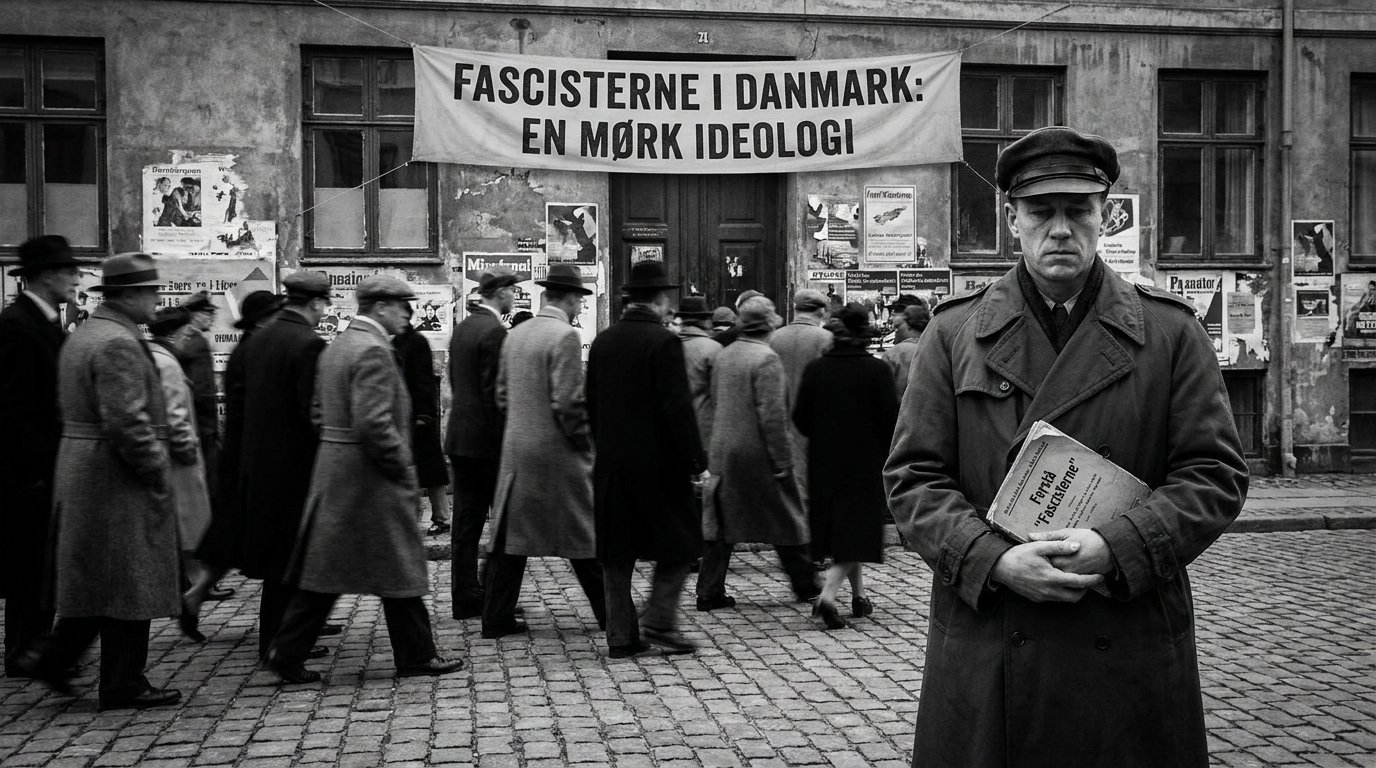
The word fascisterne is the Danish definite plural noun meaning “the fascists.” It refers to adherents of fascism, a political ideology that emerged in early 20th-century Europe and has since left an indelible stain on modern history. While often associated with Mussolini’s Italy or Hitler’s Germany, fascisterne as a concept also has a specific historical and linguistic resonance in Denmark. To understand fascisterne is to understand not only a foreign import but also a native current of authoritarian, ultranationalist thought that challenged Danish democracy from the 1930s onward.
The Core Ideology of Fascism
Before delving into the Danish context, one must define the ideology that fascisterne championed. Fascism, in its pure theoretical form—as articulated by thinkers like Giovanni Gentile and later systematized by scholars such as Robert Paxton and Roger Griffin—rejects liberal democracy, Marxism, and individualism. Instead, it glorifies the nation or race as an organic, mystical entity. Key tenets include:
Ultranationalism: An extreme, almost religious devotion to the nation’s rebirth.
Authoritarianism: Rule by a single leader or party, with no tolerance for political opposition.
Corporatism: The state mediates between capital and labor, but always under state control, eliminating class struggle.
Militarism: Glorification of violence, war, and martial virtues as purifying forces.
Anti-communism and anti-liberalism: A hatred for both Soviet-style communism and Western parliamentary systems.
In Denmark, fascisterne attempted to adapt these ideas to a small, agrarian, and traditionally consensus-driven society. This proved difficult, but not impossible.
You Might Also Like: Veterans Day
The Rise of Danish Fascism: The 1930s
The most organized group of fascisterne in Denmark was the Danmarks Nationalsocialistiske Arbejderparti (DNSAP)—the Danish Nazi Party—founded in 1930. It was directly inspired by the German NSDAP. Another smaller, more distinctly “Italian-style” fascist group was the Danmarks Fascistiske Kamporganisation. However, in common Danish parlance, fascisterne became a catch-all term for any far-right, anti-democratic agitator, including the Nazis.
The 1930s were a fertile but ultimately unsuccessful decade for fascisterne in Denmark. While fascism swept to power in Germany and Italy, Danish fascisterne failed to achieve mass appeal. Several factors explain this:
Strong Agrarian and Social Democratic Traditions: Denmark had a well-organized farmers’ movement and a powerful Social Democratic party that was already implementing welfare reforms. The fear of communism was less acute than in Germany, reducing the need for a violent fascist backlash.
Democratic Resilience: Danish democracy survived the interwar economic crises without collapsing into authoritarianism. The 1933 Kanslergade compromise between Social Democrats and the Agrarian Liberal Party (Venstre) stabilized the economy and co-opted potential radicalism.
Suspicion of German Influence: Danish nationalism was historically anti-German. DNSAP’s slavish imitation of German Nazism—down to the swastika, the “Heil” salute, and the cult of Hitler—made fascisterne appear as foreign agents rather than patriots.
Despite this, fascisterne did gain some footholds. At their peak in the 1939 Folketing election, DNSAP won only 1.8% of the vote (just over 31,000 votes), gaining three seats. Their leader, Frits Clausen, a disgraced former doctor, became the most prominent face of fascisterne in Denmark. They held rallies, published newspapers like Fædrelandet (The Fatherland), and wore uniforms, but they remained a fringe phenomenon.
The Occupation and Collaboration (1940–1945)
The German invasion of Denmark on April 9, 1940, changed everything for fascisterne. Initially, the DNSAP saw the occupation as their long-awaited opportunity. Clausen and his followers believed that the Germans would hand them power. However, reality proved more complex.
The German occupation authorities in Denmark preferred a cooperative Danish government led by the traditional parties, not the unreliable and incompetent fascisterne. The Germans viewed DNSAP as too small and disorganized to be useful. Nevertheless, from 1943 onward, as the occupation hardened, some fascisterne became more directly involved in collaboration.
The most infamous act of Danish fascisterne was not the DNSAP itself but the formation of the Schalburg Corps (later the HIPO Corps), a Danish volunteer police and terror unit under direct German command. These units, composed of radical fascisterne and pro-German mercenaries, were responsible for torture, assassinations, and reprisal killings against the Danish resistance. The 1944 murder of the priest and resistance figure Kaj Munk, a popular playwright, was blamed on fascisterne collaborators, though the actual assassins included Danish members of the Schalburg Corps.
Another manifestation of fascisterne during the war was the recruitment of Danish volunteers for the Waffen-SS. Approximately 6,000 Danish men served in Freikorps Danmark and later the Division Nordland. These men were not all committed fascisterne; some were anti-communist adventurers or young men seeking purpose. However, the core of the volunteer force was ideologically driven—true believers in the fascist crusade against Bolshevism and Jewry.
Anti-Semitism Among Danish Fascisterne
While Denmark is famous for rescuing most of its Jewish population in October 1943, this heroism was not universal. Fascisterne in Denmark actively supported anti-Semitism, though they were less virulent than their German counterparts. The DNSAP’s newspaper Fædrelandet repeatedly published articles demanding the removal of Jews from Danish public life. They advocated for a numerus clausus (quota) on Jewish professionals, called for boycotts of Jewish shops, and spread classic conspiracy theories about Jewish control of finance and media.
Why did Danish anti-Semitism not lead to mass deportations earlier? Because the Danish government, until August 1943, resisted German demands for anti-Jewish laws. After the government resigned, the Germans planned a deportation, but it was largely foiled by a grassroots rescue operation. Still, individual fascisterne acted as informants, pointing out hiding places and Jewish families. After the war, several Danish fascisterne were convicted for their role in the roundup attempts.
The Post-War Purge: The Fall of Fascisterne
With Germany’s surrender in May 1945, the era of fascisterne as an organized political force in Denmark came to an abrupt and brutal end. The Danish state launched an extensive retsopgør (legal settlement) to punish collaborators. Between 1945 and 1950, over 40,000 Danes were investigated, roughly 14,000 were sentenced, and 78 received death sentences (46 of which were carried out). The majority of those punished were fascisterne—members of DNSAP, the Schalburg Corps, and the Waffen-SS.
Frits Clausen, the leader of fascisterne, died in 1947 in a military hospital while awaiting trial for high treason. Other prominent fascisterne received prison terms of four years to life. The DNSAP was officially dissolved. For a decade, being labeled as one of fascisterne meant social, political, and professional ruin. Denmark, like much of Europe, engaged in a “de-fascistization” process, though it was far less thorough than in Germany.
Ideological Continuity: The Fringe After 1945
Did fascisterne truly disappear? Not entirely. Small, fragmented groups continued to exist on the extreme right. The 1950s and 1960s saw the rise of the National Socialist Workers’ Party of Denmark (later renamed the Danish National Socialist Movement). These neo-fascist groups never gained more than a few hundred members. They were fascisterne without power, reduced to selling badges, commemorating Hitler’s birthday, and fighting among themselves.
It was not until the 1970s and 1980s that a new type of far-right movement emerged—more populist and Islamophobic than classical fascist. Groups like the Fremskridtspartiet (Progress Party) and later the Dansk Folkeparti (Danish People’s Party, DPP) borrowed nationalist and anti-immigrant rhetoric but explicitly rejected the fascist label. DPP leaders such as Pia Kjærsgaard were careful to distance themselves from fascisterne, condemning the DNSAP and the occupation-era collaboration. This “respectable” far-right captured 13-21% of the vote in the 2000s, proving that while fascisterne as a brand was dead, their ultranationalist ideas could be repackaged.
The Modern Echo: “Fascisterne” as a Political Slur
Today, in Danish political discourse, the word fascisterne is almost never used as a self-description. No serious political party calls itself fascist. Instead, fascisterne is a derogatory label deployed by the left against the right, and occasionally by the far-right against the left (e.g., “cultural Marxists are the true fascisterne,” a reversal that mirrors global alt-right rhetoric).
For example, during the 2019 Folketing election, members of the Enhedslisten (Red-Green Alliance) called certain immigration policies of the Social Democrats “fascist-lite.” Conversely, online hate groups and neo-Nazi forums still celebrate the memory of fascisterne from the 1930s and 1940s, though they remain tiny in number. Estimates suggest that active neo-Nazis in Denmark number fewer than 200.
Lessons from the Danish Case
The history of fascisterne in Denmark offers several important lessons for political science and democratic resilience.
First, fascism does not thrive everywhere. Denmark’s strong civil society, early welfare state, and culture of compromise ( forhandlingskultur ) built a bulwark against the extreme polarization that enabled Hitler. Fascisterne remained marginal because the center held.
Second, foreign-backed fascism is often incompetent. The DNSAP’s dependence on German patronage made them appear as traitors, not patriots. When the Germans refused to empower them, fascisterne were left humiliated. This demonstrates that fascist movements that sell out national sovereignty for ideological purity often collapse.
Third, the danger of fascisterne was not only in their electoral success but in their capacity for violence. Even with under 2% of the vote, they produced torturers, informants, and assassins during the occupation. Small radical minorities can cause immense harm when given state cover or a wartime environment.
Conclusion
Fascisterne—the fascists of Denmark—represent a warning. They were a minority, never a majority. Their uniforms, their salutes, their newspapers, and their dreams of a totalitarian Danish state were ultimately crushed by Allied victory and the Danish legal purge. Yet their legacy persists in two ways: as a haunting memory of what can happen when nationalism curdles into ultranationalism, and as a living slur, a term of ultimate political condemnation.
To study fascisterne is to study the limits of extremism. It is to ask: under what conditions do such movements grow? And under what conditions do they wither? For Denmark, the answer is reassuring but not absolute. Democratic institutions, economic equality, and a healthy distrust of foreign dictatorships kept fascisterne in their place. But as modern populism rises across Europe, the Danish example of fascisterne reminds us that the embers of authoritarian nationalism can always be reignited—even in the most consensual of societies.
The word fascisterne may now be a historical artifact, but the impulses that created them—tribalism, hatred of the other, contempt for democracy—are not. And so, the story of fascisterne is not merely a Danish story. It is a human story, and a timeless one.