 By Casey Rivers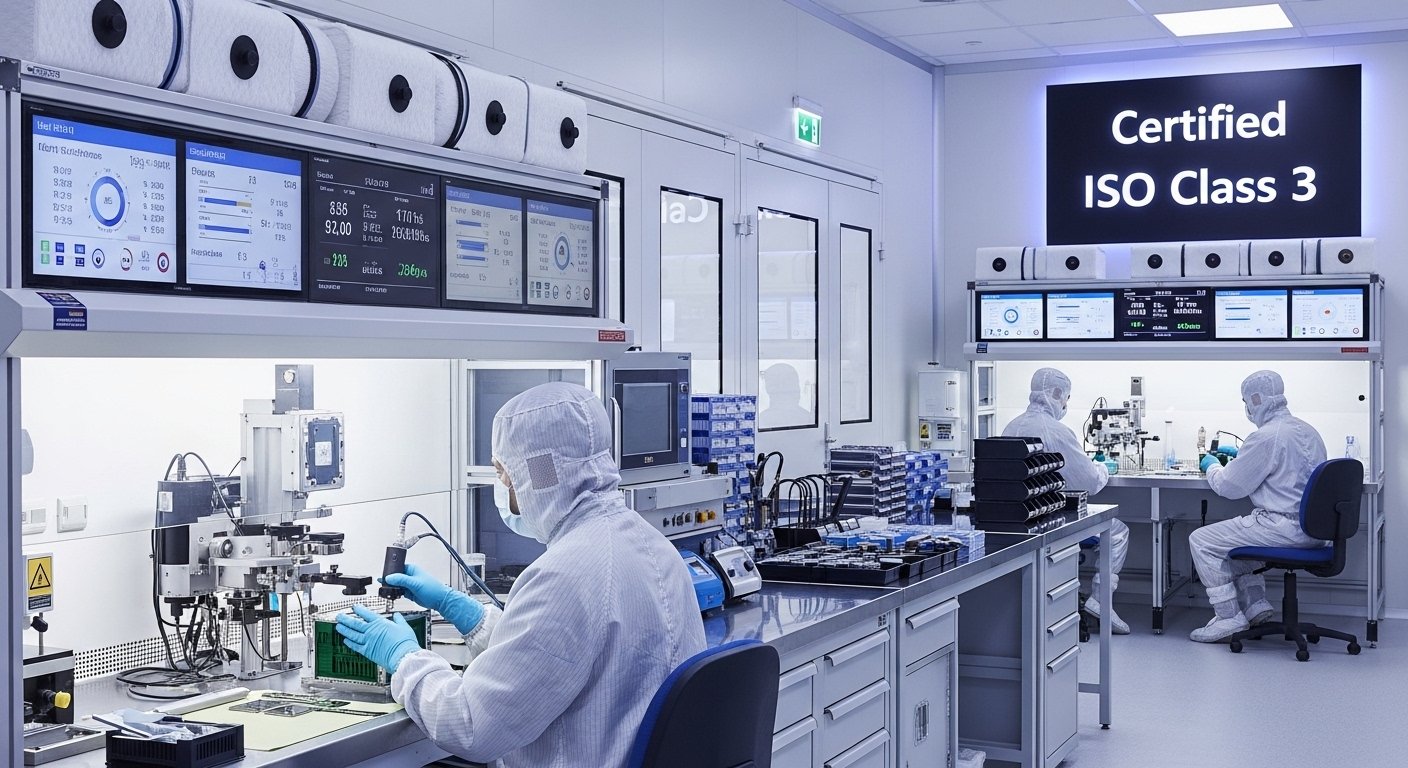
As industries like pharmaceuticals, biotechnology, and electronics manufacturing continue to evolve, staying current with cleanroom standards has never been more critical. These environments rely on rigorous contamination control measures and precise regulatory compliance, which frequently adjust in response to scientific advances, emerging threats, and evolving operational demands. Today’s emphasis lies not only in initial design and construction but also in ongoing management and auditing by expert cleanroom certification companies that help organizations meet increasingly stringent compliance requirements.
With complex manufacturing and global supply chains, understanding shifts in cleanroom standards is key for product quality and safety. Leaders and managers must recognize the importance of advanced technology, better materials, and certification to reduce risks and improve processes. Recent standards changes, new materials, and digital tech are narrowing the gap between regulations and actual cleanroom performance, helping protect products and people while boosting efficiency. Staying updated on these developments is vital for organizations to stay competitive. Adopting these improvements helps industries improve contamination control and exceed current cleanroom expectations.
ISO 14644 Updates: A New Era in Cleanroom Classification
ISO 14644 remains the core of global cleanroom standards, updated periodically to incorporate scientific advances and operational experience. The 2025 revisions to ISO 14644-1 expand particle size thresholds, thereby enhancing sensitivity and accuracy in contamination detection. New procedures for statistical sampling and spatial measurement improve the evaluation of cleanroom performance. ISO 14644-5 emphasizes operational controls like personnel movement audits, cleaning, and air filtration calibration, reducing human error and equipment failure, and major contamination sources. As the cleanroom environment evolves, regular updates and reassessment of these standards are vital for compliance and process control. These ISO updates aim to increase transparency, record accuracy, and risk management. Operators should stay informed by reviewing ISO Technical Committee publications.
Material Innovations: Enhancing Contamination Control
The foundation of a cleanroom’s effectiveness lies not only in its design and airflow but also in the choice of construction materials. Recent advances in polymer science and surface engineering have enabled the development of antimicrobial composites for flooring, wall coverings, and ceiling panels. These next-generation surfaces prevent microbial adhesion and withstand harsh sterilization procedures, resulting in a longer lifecycle and reduced need for frequent, costly maintenance. This allows cleanroom operators to better meet the demands of ever-tightening contamination thresholds.
Among these innovations, hydrophobic surface coatings and embedded antimicrobial agents actively suppress microbial growth, providing an extra line of defense beyond regular cleaning. The adoption of such materials means cleaner critical spaces, fewer production interruptions, and less reliance on intensive labor for cleanliness maintenance.
Smart Monitoring Systems: The Digital Transformation of Cleanrooms
Digitization revolutionizes cleanroom management through web sensors and IoT networks that continuously monitor environmental data such as particulate matter, humidity, airflow, and temperature. Real-time predictive analytics helps managers anticipate failures, optimize HVAC systems, and respond quickly to environmental changes. Cloud dashboards and alerts ensure transparency, regulator-ready documentation, and audit trails. These tools reduce contamination risk and improve efficiency, shifting compliance to a proactive approach. With increasing demand for auditable, data-driven processes, smart monitoring integrates seamlessly into modern quality systems.
Regulatory Changes: Aligning with Global Standards
The tightening of global regulations, particularly those set by agencies such as the FDA and EMA, is driving harmonization across the industry. Recent Good Manufacturing Practice (GMP) revisions promote the use of unidirectional airflow in critical zones, enforce real-time particle monitoring, and require extensive documentation of operational deviations. These enhanced guidelines align with the updated ISO 14644 principles, creating a unified framework for international organizations.
Complying with these evolving requirements means more than just technical upgrades. Manufacturers must foster a culture of continuous improvement, data-driven management, and ongoing training to keep their teams prepared for internal and external audits.
The Certification Process: Ensuring Compliance and Quality
The path to cleanroom certification is multi-layered and involves five primary steps:
- Planning and Preparation: Identifying all relevant standards and documenting a site-specific strategy for compliance.
- Testing and Evaluation: Conducting rigorous performance testing for particulate levels, temperature, humidity, airflow, and pressure gradients.
- Documentation: Compiling all environmental readings, equipment logs, personnel training records, and deviation reports.
- Certification/Audit: Completion of third-party reviews or internal audits to confirm procedural and operational conformity to standards.
- Ongoing Surveillance: Adopting regular retesting and re-certification intervals, supported by continuous environmental monitoring and corrective action tracking.
Equally important is effective personnel training and engagement, which help mitigate human error and secure lasting quality outcomes. By standardizing these practices and embracing new technologies, organizations can achieve greater efficiency, enhanced compliance assurance, and regulatory resilience.
Conclusion
The landscape for cleanroom standards and certification is evolving rapidly, driven by new international standards, breakthroughs in materials science, and digital transformation. Organizations that adopt updated ISO protocols, integrate advanced monitoring systems, and leverage the latest-generation materials position themselves at the forefront of contamination control and regulatory compliance. Regular engagement with skilled cleanroom certification companies will be increasingly necessary to meet high benchmarks for safety, effectiveness, and operational excellence. Sustaining compliance requires a culture of collaboration, innovation, and unwavering commitment to best practices.