 By Jude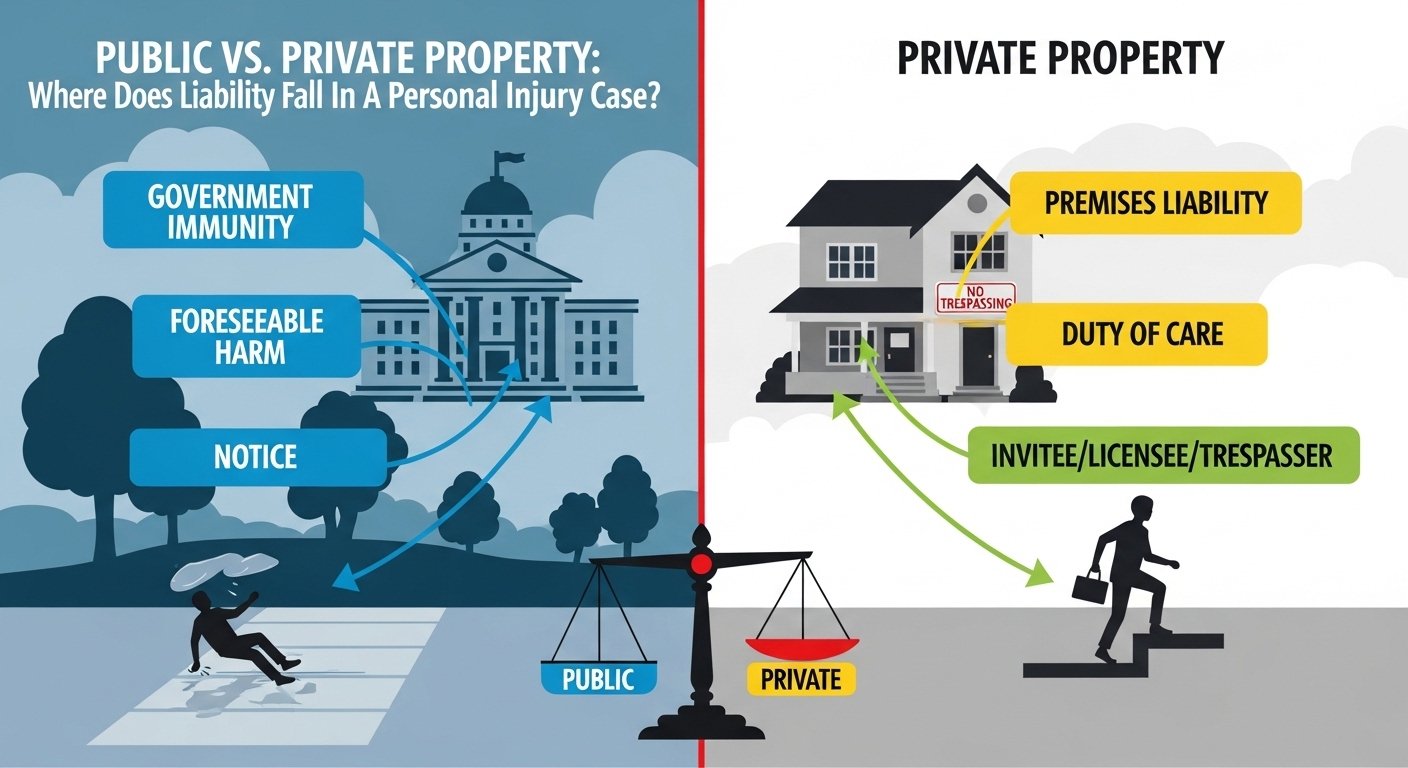
When you fall or get hurt, the ground under your feet suddenly matters. You might ask if the property is public or private. You might also ask who must pay for your medical bills, lost wages, and pain. The answer is not simple. City sidewalks, government buildings, stores, and homes all follow different rules. Each one carries different duties to keep you safe. One mistake is to assume you have no rights on public land. Another mistake is to treat all private owners the same. This confusion can leave you silent, stressed, and unpaid. Brian Boyer Injury Firm’s guide to public space and premises liability explains how responsibility works on both public and private property. It shows when a city, business, or homeowner is at fault. It also shows what you must prove after a fall, trip, or other injury on someone else’s property.
Why the type of property changes your case
After an injury, you need answers fast. You need to know who had the duty to keep you safe. You also need to know what rules control your claim.
Liability usually depends on three questions.
- Who owned or controlled the property.
- What you were doing there.
- What the owner knew or should have known about the danger.
On both public and private land, the law looks at whether the owner acted with reasonable care. That means simple steps that a careful person would take. For example, cleaning spills, fixing broken steps, or warning about hazards.
Public property: when a city or agency may be at fault
Public property includes places like sidewalks, parks, schools, and government offices. A public body usually owns or controls these spaces. That can be a city, county, state, or federal agency.
On public property, you often face extra rules.
- You may have a short deadline to give written notice of your claim.
- You may need to send the notice to a specific office.
- Your claim may have a cap on the money you can receive.
You still must prove that the public body knew or should have known about the danger. You also must show that it failed to fix it or warn you in time.
For example, a cracked sidewalk that has been there for months is different from a branch that fell seconds before you walked by.
You can read about state injury claim rules in many state codes. As one model, see how the Federal Tort Claims Act works for some federal injury claims at the United States Department of Justice site: https://www.justice.gov/civil/federal-tort-claims-act-faqs.
Private property: stores, homes, and workplaces
Private property includes grocery stores, malls, offices, rental homes, and private yards. Owners and tenants must keep these spaces reasonably safe for people they invite in.
Your status on the property matters.
- Customer or guest. You usually have strong protection.
- Social visitor. You still have rights if the owner knew of a danger and did not warn you.
- Trespasser. You have limited rights. Children often receive extra protection.
On private property, you often deal with insurance. That can be business liability insurance or homeowner coverage. You must show that the owner or tenant failed to act with reasonable care under the facts.
Key differences between public and private liability
| Issue | Public Property | Private Property
|
|---|---|---|
| Who you may sue | City, county, state, school district, or federal agency | Business owner, tenant, landlord, or homeowner |
| Notice rules | Often must file written notice within months | Usually no formal notice rule before suit |
| Money limits | Often has damage caps by law | Often limited by insurance policy or assets |
| Common examples | Sidewalk defects, park hazards, school injuries | Store spills, stairs, rental property hazards |
| Main challenge | Strict deadlines and extra immunity rules | Proving notice and unsafe conditions |
What you must prove in a personal injury case
Whether the property is public or private, most premises cases need three core facts.
- There was a dangerous condition.
- The owner or person in control knew or should have known about it.
- The owner failed to fix it or warn you, and that failure caused your injury.
Evidence matters. Useful proof can include photos, videos, witness names, and medical records. It can also include records of prior complaints or work orders that show the owner had warning of the danger.
The Centers for Disease Control and Prevention explains how common fall injuries are and why prevention steps matter. You can review data on falls at https://www.cdc.gov/homeandrecreationalsafety/falls/index.html. This kind of data often supports the idea that simple safety steps prevent harm.
Steps to take right after an injury
You may feel shock or shame after a fall or other accident. You might want to stand up and walk away. That choice can hurt your claim and your health.
- Report the injury at once to staff, the owner, or the agency.
- Seek medical care and follow the treatment plan.
- Collect evidence. Take photos, keep clothing and shoes, and write down what happened.
Next, find out who owns or controls the property. That step guides every part of your claim. It changes your deadlines, your target, and your options.
How public and private rules affect your family
Injuries hurt more than your body. They can strain your savings and your relationships. They can leave you anxious about walking in simple places like sidewalks or stores.
Understanding the split between public and private property gives you power. It helps you act fast. It keeps you from missing harsh time limits on claims against public bodies. It also helps you press a fair claim against private owners who ignore clear dangers.
You do not need to sort every rule on your own. You only need to know that the type of property changes who is responsible and how you must prove your case. That knowledge helps you ask clear questions, keep firm records, and protect your family after a painful event.