
 By Casey Rivers
The landscape of network security is undergoing rapid evolution, driven by the increased prevalence of remote work, wide-scale cloud adoption, and the escalating complexity of cyber threats. A traditional, perimeter-based security model no longer suffices as workforces become more distributed and corporate data moves outside the boundaries of the office network. In response, many organizations are turning to Secure Access Service Edge (SASE), a transformative framework that unifies networking and security into a seamless, cloud-first architecture.
SASE is not only changing the way organizations protect critical assets, but it is also redefining network performance and management. By consolidating multiple networking and security functions, it provides businesses with the agility and scalability needed to thrive in a digital-first environment. This comprehensive approach is crucial as organizations strive to address increasingly complex cyber risks while ensuring an optimal user experience for both employees and customers.
As demand for hybrid and remote work solutions continues to rise, the limitations of traditional network security models become increasingly apparent. Companies must look beyond legacy systems and embrace solutions that offer end-to-end visibility, unified control, and real-time adaptability. SASE rises to meet these demands by providing dynamic, perimeter-less security that aligns with the realities of modern IT infrastructure.
According to a Gartner report, public cloud spending is expected to surge, further fueling the demand for agile, cloud-native security solutions like SASE. As enterprises scale their operations and digital footprints, integrated solutions are key to maintaining resilience and competitiveness.
The Evolution of Network Security
Traditional network security relied primarily on well-defined perimeters (“castle and moat” models), where security tools such as firewalls and intrusion detection systems protected a static corporate network. However, with the mainstream adoption of SaaS applications, mobile devices, and remote work, these boundaries have effectively disappeared. Users and devices now access company resources from virtually anywhere, increasing the points of entry for cyber attackers.
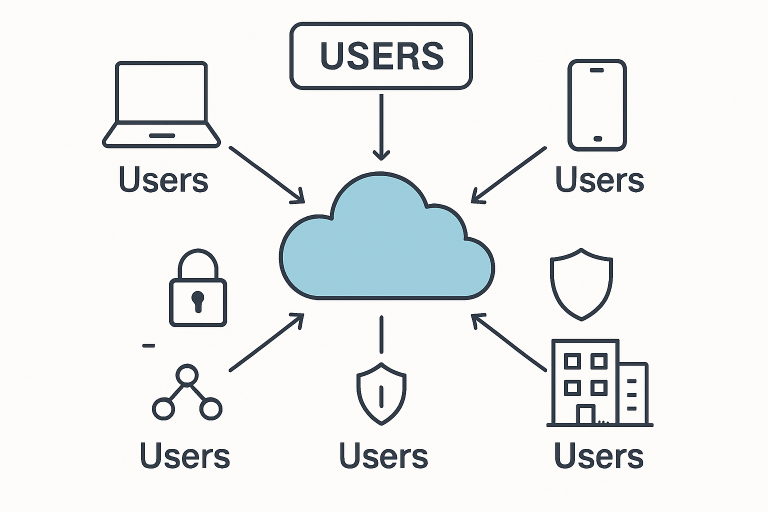
This shift has highlighted the limitations of point-product solutions, which frequently struggle to deliver a comprehensive, scalable, and adaptable defense. Today’s organizations require security that is both omnipresent and context-aware, capable of dynamically adapting to where and how users work.
What Is SASE?
SASE, or Secure Access Service Edge, is a cloud-delivered framework that integrates a suite of network and security services — including Software-Defined Wide Area Networking (SD-WAN), Secure Web Gateway (SWG), Cloud Access Security Broker (CASB), Zero Trust Network Access (ZTNA), and Firewall as a Service (FWaaS) — into a single, unified platform.
By merging these essential services, SASE eliminates the need for disparate, often incompatible point solutions, resulting in a simplified architecture and reduced management overhead. SASE’s cloud-native design enables organizations to enforce consistent security policies, optimize traffic routing, and deliver secure access to applications and data regardless of user location or device type.
Benefits of Adopting SASE
- Enhanced Security: With SASE, organizations can implement uniform security controls across all edges of their network, regardless of where users connect or which resources they access. Centralized policy enforcement is crucial for protecting data in hybrid or fully remote work contexts.
- Improved Performance: SASE utilizes proximity-based routing and traffic optimization to deliver lower latency and an enhanced user experience by directly connecting users to resources, eliminating unnecessary detours through traditional data centers.
- Simplified Management: Consolidating security and networking functions into a single platform streamlines administration, reduces errors, and saves operational costs, freeing IT teams to focus on business priorities.
- Scalability: The cloud-native nature of SASE means organizations can rapidly scale up or down as their workforce and data needs change, eliminating the constraints of physical hardware or data center limitations.
Real-World Applications
SASE adoption is growing across a diverse range of industries, including finance, healthcare, retail, and manufacturing. Large enterprises and mid-sized businesses alike are leveraging SASE to enable secure connectivity for remote offices, field teams, and global branches, protecting sensitive data and ensuring consistent policy enforcement. For example, a recent survey by TechRadar revealed that a majority of IT leaders are considering or deploying SASE solutions to address challenges brought on by the hybrid work revolution.
Challenges in SASE Implementation
- Integration Complexity: Integrating an existing legacy architecture with a new SASE platform can be complicated, requiring careful planning and often a phased deployment.
- Skill Gaps: Organizations may struggle to upskill their teams or find talent familiar with SASE platforms, which can slow adoption and impact operational efficiency.
- Vendor Selection: With numerous providers entering the market, selecting a SASE vendor that aligns with an organization’s unique needs, compliance requirements, and budgetary constraints can be a daunting task.
Future Outlook
As organizations prioritize cloud migration and digital transformation, the momentum behind SASE is expected to continue growing. Forecasts from industry analysts predict that by 2026, a majority of enterprises will shift away from multi-product network security strategies in favor of converged, cloud-delivered solutions, such as SASE. This trend signals a significant transformation in the way digital assets are protected, managed, and accessed.
With continuous innovation from both established vendors and new entrants in the security market, SASE is likely to evolve, offering even greater integration, automation, and intelligence, thereby empowering businesses to stay ahead of rapidly shifting security landscapes and compliance mandates.
Conclusion
Secure Access Service Edge (SASE) is transforming network security by providing a comprehensive, unified framework tailored to the demands of today’s digital landscape. By combining essential networking functions—such as SD-WAN and traffic optimization—with robust security services including firewall-as-a-service, secure web gateways, and zero-trust access into a single, cloud-native platform, SASE eliminates the complexity of managing disparate systems. This integrated approach enables organizations to scale effortlessly, adapt quickly to changing business needs, and maintain consistent security policies across all locations and devices. Employees can connect securely from anywhere, while IT teams gain simplified management and visibility, enhancing both operational efficiency and protection against evolving cyber threats.